
Changelog
Backboard.io vs Supermemory
At a surface level, comparing Backboard and Supermemory is reasonable. Both are focused on helping AI systems retain information across interactions rather than starting from zero every time.
Similar goals around memory. Very different assumptions about responsibility.
The divergence appears once you look at who is responsible for making memory actually work.
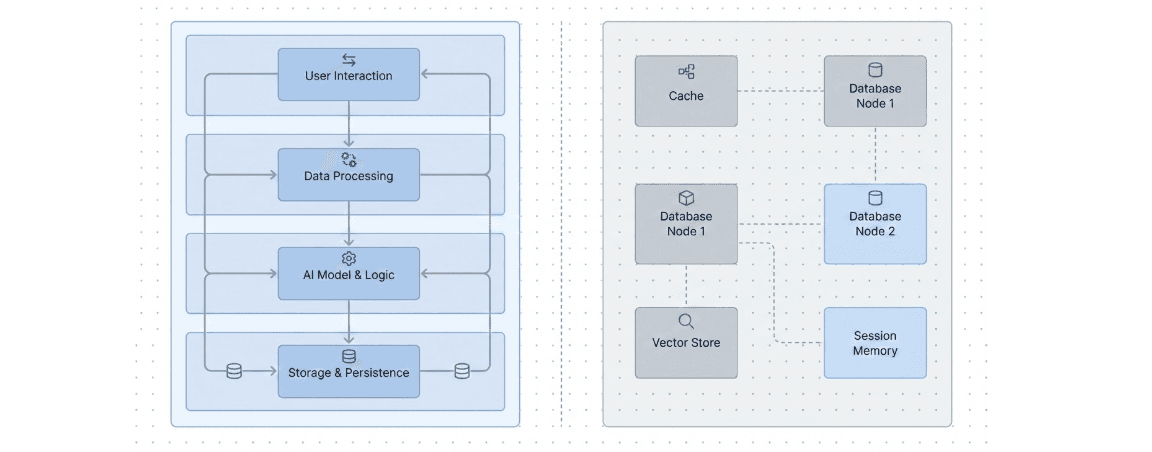
Supermemory provides memory primitives. Backboard provides a memory system.
That difference becomes decisive in production environments.
What Supermemory is optimized for
Supermemory is designed to give developers explicit control over memory operations. It emphasizes:
Clear APIs for reading and writing memory
Developer-managed memory lifecycles
Lightweight integration into existing agent frameworks
Flexibility over opinionation
For teams that already have orchestration logic, prompt assembly, and retrieval flows in place, this can be appealing. Supermemory fits into a stack rather than redefining it.
The tradeoff is that correctness is externalized.
Memory handling: manual versus default-safe
With Supermemory, developers decide:
When to write memory
What to write
When to retrieve memory
How to merge memory into prompts
This gives flexibility, but it also creates failure modes. Miss a write and context disappears. Miss a read and the system behaves as if it forgot. These failures are often silent.
Backboard takes a different approach.
By default, Backboard:
Automatically writes memory
Automatically retrieves relevant memory
Maintains state across full threads
Persists memory across sessions and models
You can still intervene when needed, but the baseline behavior is designed to be safe and consistent without constant developer involvement.
Accuracy versus availability
Supermemory focuses on making memory available. Backboard focuses on making memory accurate.
Availability alone is not enough. The system must retrieve the right memory at the right time and avoid polluting prompts with irrelevant context. Backboard treats this as a core optimization problem rather than a downstream concern.
In long-running conversations, agents, or user-facing assistants, this difference compounds quickly.
Scope: memory service versus AI runtime
Supermemory is intentionally narrow. It does one thing and expects the rest of the stack to be assembled elsewhere.
Backboard includes that stack.
In addition to memory, Backboard provides:
Stateful threads across sessions
Long-term and short-term memory coordination
LLM routing across providers
Retrieval augmented generation
Tool calling and custom tools
Web search
Model switching without losing context
Unified usage tracking and billing
This reduces the number of integration points where state can break or drift.
Developer experience tradeoff
Supermemory favors explicitness and control. Backboard favors leverage and defaults that hold under real-world usage.
If your team is comfortable orchestrating memory logic, retrieval logic, routing logic, and tool state independently, Supermemory can slot into that architecture.
If your goal is to minimize glue code and reduce the surface area for subtle bugs, Backboard removes entire classes of decisions you otherwise need to get right.
When Supermemory makes sense
Supermemory is a good fit if:
You only need a standalone memory API
You already manage orchestration and retrieval
You want full control over memory reads and writes
Your application scope is narrow or experimental
When Backboard is the better fit
Backboard is the stronger choice if:
Memory accuracy matters in production
You need state across long-lived threads
You want memory to survive model changes
You want routing, tools, and retrieval to share context
You want fewer moving parts and fewer silent failures
Bottom line
Backboard and Supermemory both acknowledge that memory matters.
Supermemory gives you the building blocks.
Backboard gives you a system that works by default.
If you want to assemble and manage memory behavior yourself, Supermemory is a valid option.
If you want memory, state, and orchestration to behave correctly without constant intervention, Backboard is designed for that reality.
Next step: map out how many places in your current stack are responsible for memory correctness.
One question to pressure-test the decision: are you confident that every memory read and write in your system will still be correct six months from now as the product evolves?
Changelog